Leak detection on concealed and buried water pipes
A water pipe leaking inside a floor slab, a wall or under the garden can't be seen: you only notice the effects, a turning meter, a damp patch, falling pressure. Expomis locates this kind of leak without opening up at random, using the right method for the pipe concerned.
Signs of a water pipe leak
- the water meter keeps turning with all taps and appliances off;
- a stain appears on the ceiling, at the foot of a wall or on a screed floor;
- one area of the floor is warmer than the rest (hot water leak);
- you can hear constant running or hissing;
- water pressure at the tap has dropped for no obvious reason.
First find the circuit, then the leak
A house has several circuits: cold water, hot water, sometimes a recirculation loop, and the heating. Before looking for where the leak is, we establish which circuit it is on by pressure testing section by section. This narrows down the search area and avoids false leads.
How we pinpoint the leak
- Hot water pipe: thermal imaging shows the route of the pipe and the area where hot water is spreading.
- Pressurised pipe, including cold water: acoustic detection picks up the sound of escaping water.
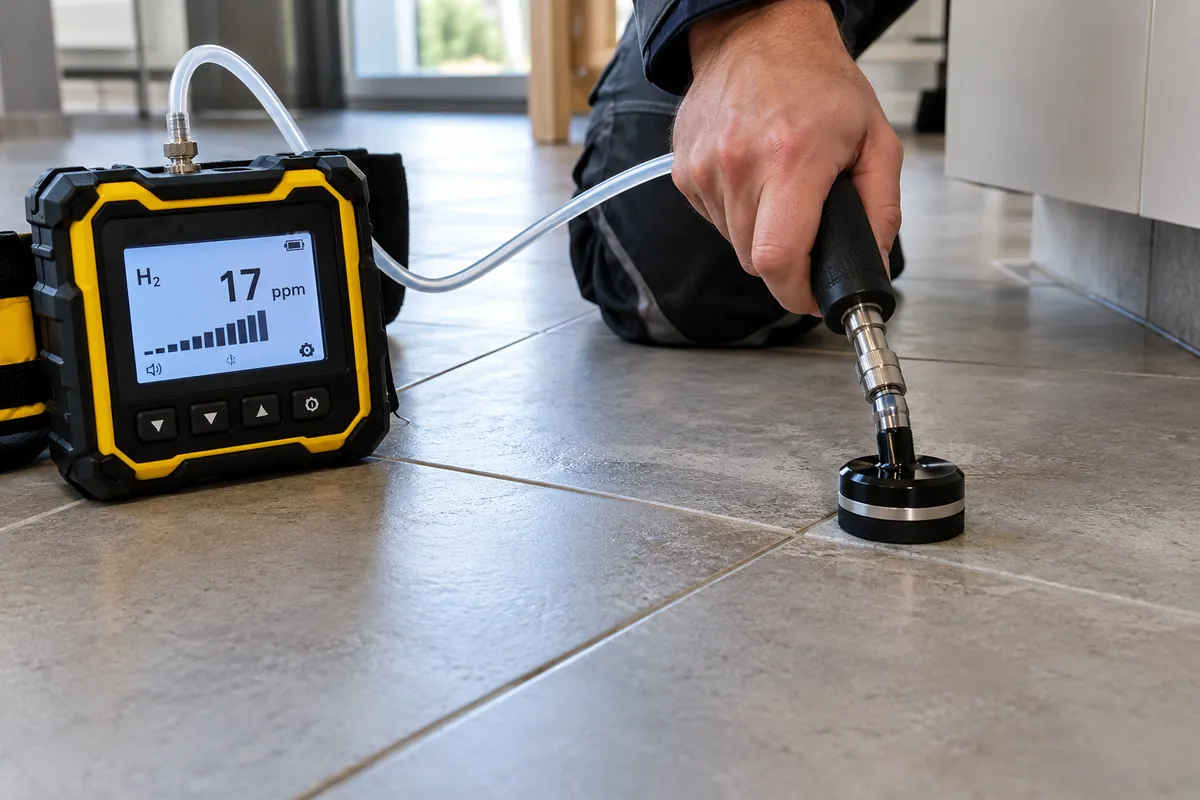
- Small, silent leak under a thick slab or underground: tracer gas rises to the surface directly above the leak.
We often cross-check with two methods to confirm the location before marking it.
Buried pipes
The pipe supplying the building, a garage, a garden shed or an outdoor tap can run for dozens of metres under the lawn or the driveway. Tracer gas and acoustic detection show where to dig, instead of trenching along its whole length.
Depending on where the leak is, the repair may be the responsibility of the water supplier or the commune rather than the owner. Pinpointing it also tells you who is responsible.
Frequently asked questions
My meter keeps turning with everything off: is it always a leak?
Almost always, unless an appliance is using water without you knowing: a toilet cistern that keeps running, a water softener regenerating, a dripping safety valve on the water heater. Check these first; our page on high water consumption explains how.
Does the water need to be turned off during the visit?
For some tests, yes: pressure testing and tracer gas require isolating, or even draining, the section being tested. The interruption only lasts as long as the test.
Related pages
High water consumption
Abnormal bill, meter turning: finding the leak that leaves no trace.
Read moreHeating and underfloor heating leak
Boiler losing pressure, underfloor heating, radiators and heating pipes.
Read moreLeak detection in Luxembourg
Non-destructive detection of water leaks and water ingress across the Grand Duchy, report within 72 hours.
Read moreA leak, water ingress, an insurance claim?
Describe the situation and we'll tell you how we would proceed. 24/7 emergency service.