Tracer gas leak detection
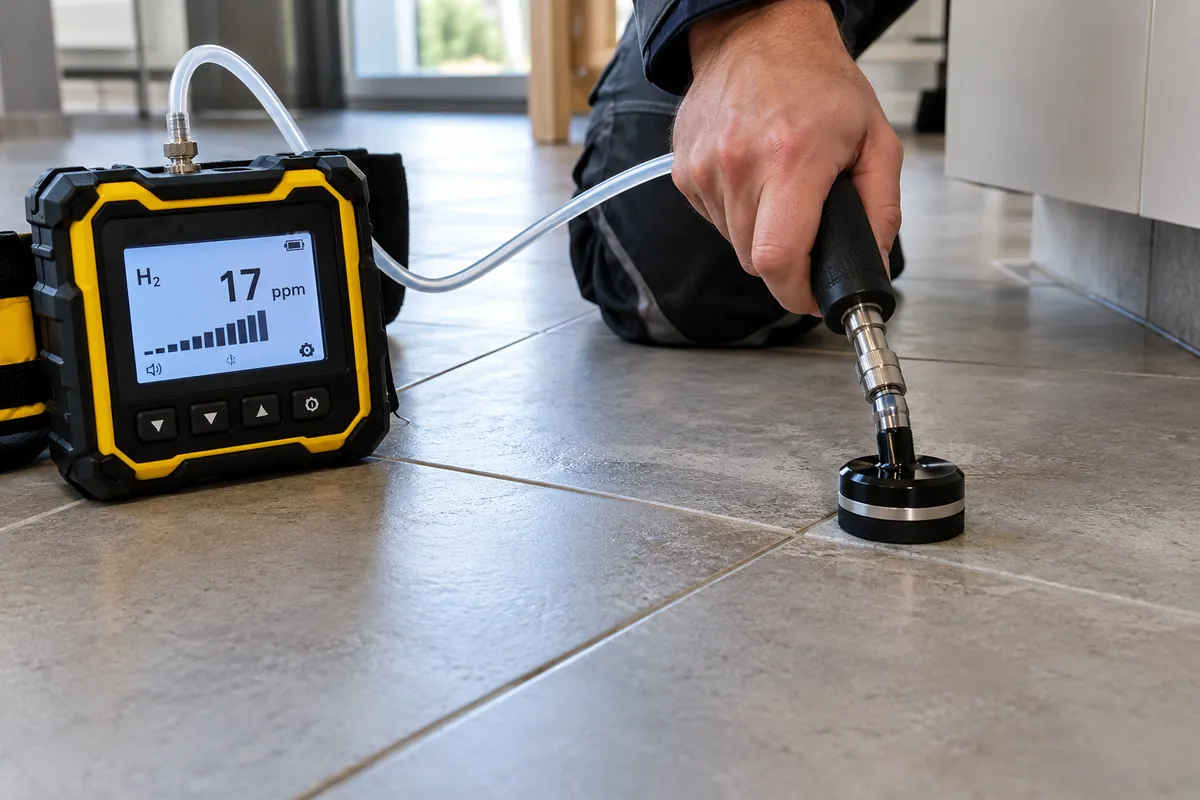
Tracer gas is a mix of nitrogen and hydrogen that is non-toxic and non-flammable in this proportion. Injected into a pipe, it escapes through the leak, passes through the screed, tiles or soil, and a highly sensitive detector picks it up at the surface, directly above the leak.
How it works
The water is turned off and the section concerned is drained, then the gas is injected under pressure. Hydrogen is the smallest and lightest molecule: it passes through building materials and rises to the surface. We then sweep the route of the pipe with a probe; the highest concentration marks the leak.
When we use it
- small, silent leaks that acoustic detection cannot pick up;
- pipes under a slab or underground;
- underfloor heating when the thermal camera does not give enough contrast.
Limits
The section being tested must be isolated and drained. Some very tight floor coverings slow the gas down, and draughts disperse it. The method cannot be used on drains, which are not gas-tight by design: we use a smoke test instead.
Frequently asked questions
Is tracer gas dangerous?
No. The mix we use contains 95% nitrogen and 5% hydrogen: it is non-flammable, non-toxic, odourless and disperses in the air.
Related pages
Water pipe leak
Water pipe concealed in a floor slab or a wall, or buried under the garden.
Read moreAcoustic detection
Electro-acoustic listening and correlation: the sound of water escaping under pressure.
Read morePressure test
Confirms the leak and identifies the circuit involved, before any location work.
Read moreA leak, water ingress, an insurance claim?
Describe the situation and we'll tell you how we would proceed. 24/7 emergency service.