Leak detection with a thermal imaging camera
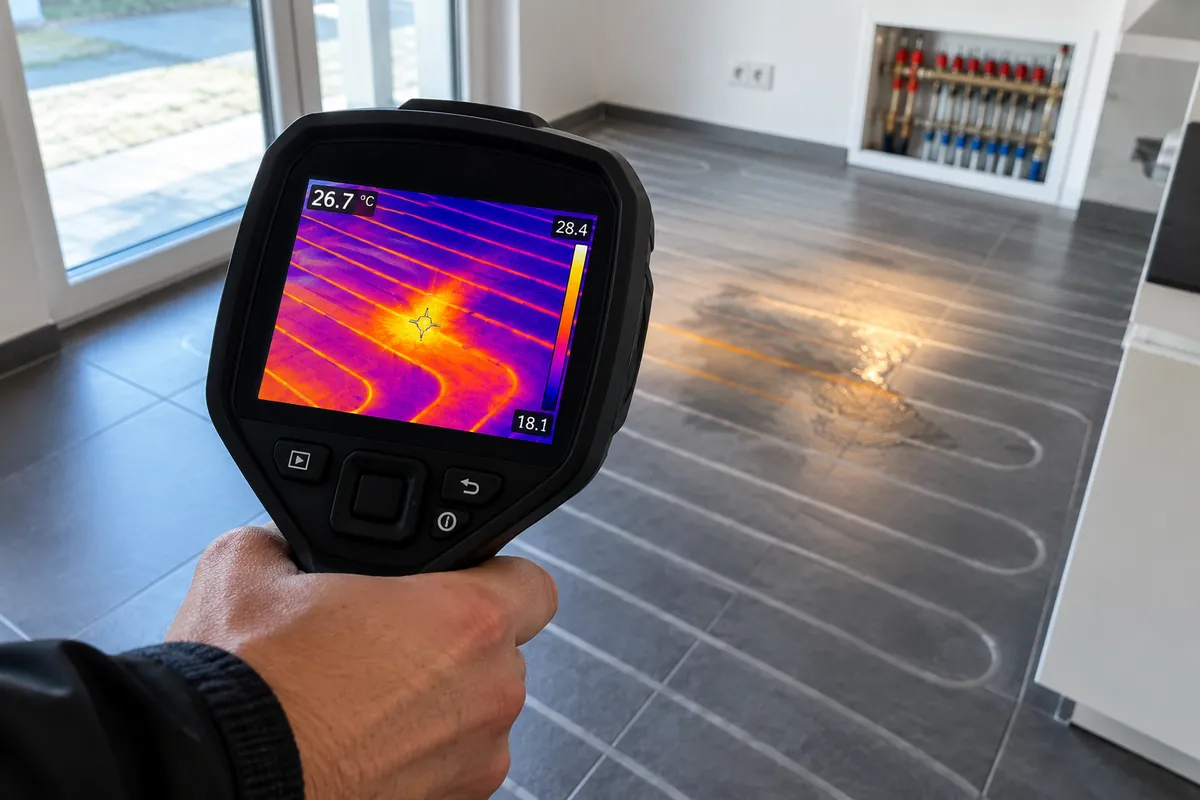
Infrared thermography measures surface temperatures from a distance and turns them into an image. When hot water escapes from a pipe or an underfloor heating loop, it warms the screed or the wall around the leak: the thermal camera reveals this warm patch without touching anything.
How it works
The camera does not see through walls: it reads the surface temperature, and what is happening behind it is deduced from the temperature differences. For a hot water or heating leak, the circuit is heated up and we watch the heat spread: first the layout of the pipes appears, then the area where the water is spreading.
On a wet wall it works the other way round: evaporation cools the surface, so the damp area shows up colder than the rest.
When we use it
- underfloor heating and heating pipes;
- concealed hot water pipes;
- mapping the extent of a damp area after water ingress or water damage.
Limits
It needs a temperature difference. A cold water leak in a wall at room temperature is hard to see. A thick floor covering or floorboards laid on battens weaken the signal, and shiny surfaces reflect the radiation. In those cases we switch to tracer gas or acoustic detection.
Frequently asked questions
Can a thermal camera see through walls?
No. It measures the surface temperature. It is the escaping hot water that changes this temperature and gives away the position of the leak.
Related pages
Heating and underfloor heating leak
Boiler losing pressure, underfloor heating, radiators and heating pipes.
Read moreTracer gas
A nitrogen-hydrogen mix that rises to the surface directly above even the smallest leaks.
Read moreMoisture mapping
Mapping the damp area: how far it extends, and which side the water is coming from.
Read moreA leak, water ingress, an insurance claim?
Describe the situation and we'll tell you how we would proceed. 24/7 emergency service.