Acoustic leak detection
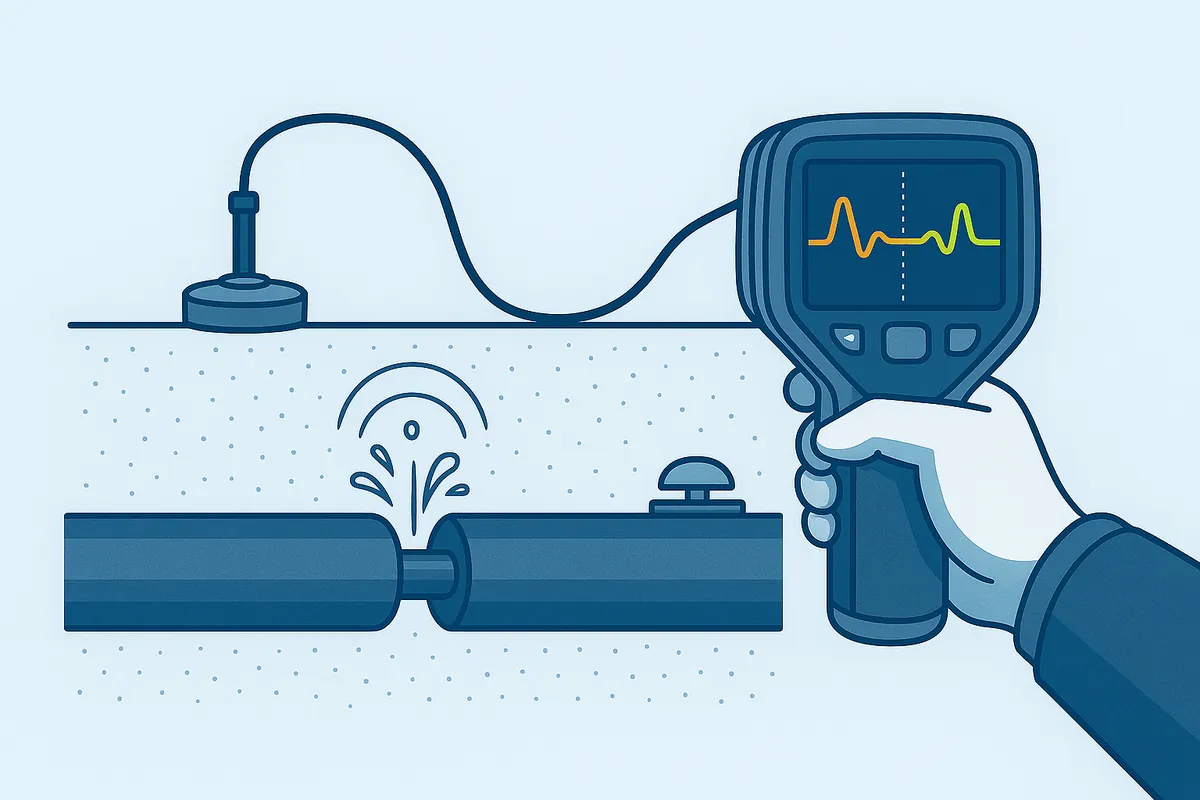
A leaking pressurised pipe makes a noise: water escaping through a crack hisses or rushes, and the sound travels along the pipe and through the ground. Electro-acoustic listening amplifies these sounds to find the point where they are loudest, which is directly above the leak.
How it works
A highly sensitive ground microphone is placed point by point along the route of the pipe. The device amplifies and filters the signal to separate the leak noise from background noise. The sound gets louder as you get closer to the leak.
On longer pipes, acoustic correlation uses two sensors on either side of the suspect area. The difference in the time the sound takes to reach each sensor is used to calculate the position of the leak.
When we use it
- pressurised mains water pipes, cold water included;
- buried pipes under a garden or a drive;
- pipes under a concrete slab.
Limits
The method needs pressure: it does not work on drains. Very small leaks make little noise, and background noise (traffic, pumps, appliances running) interferes with listening. Soft ground or loose soil dampens the sound. In those situations, tracer gas takes over.
Related pages
Water pipe leak
Water pipe concealed in a floor slab or a wall, or buried under the garden.
Read moreTracer gas
A nitrogen-hydrogen mix that rises to the surface directly above even the smallest leaks.
Read moreHigh water consumption
Abnormal bill, meter turning: finding the leak that leaves no trace.
Read moreA leak, water ingress, an insurance claim?
Describe the situation and we'll tell you how we would proceed. 24/7 emergency service.