Leak detection on drains and sewers
Drains are not under pressure: a leak only shows when water is flowing, after a shower, a wash or a flush. That is why they escape the methods used for pressurised pipes. Expomis uses methods designed for drainage systems: fluorescein dye, smoke testing and CCTV inspection.
Signs of a drain leak
- a stain that appears or grows after a particular appliance is used;
- sewer smells in a room or in the basement;
- damp at the foot of a downpipe or along a basement wall;
- slow drainage or recurring backflow;
- subsidence above a buried pipe.
Three complementary methods
- Fluorescein dye: the water from one appliance at a time is coloured, and we watch where it reappears. This tells us which appliance, which drain is at fault.
- Smoke testing: a non-toxic smoke sent into the system escapes through poorly fitted joints and cracks. Ideal for smells.
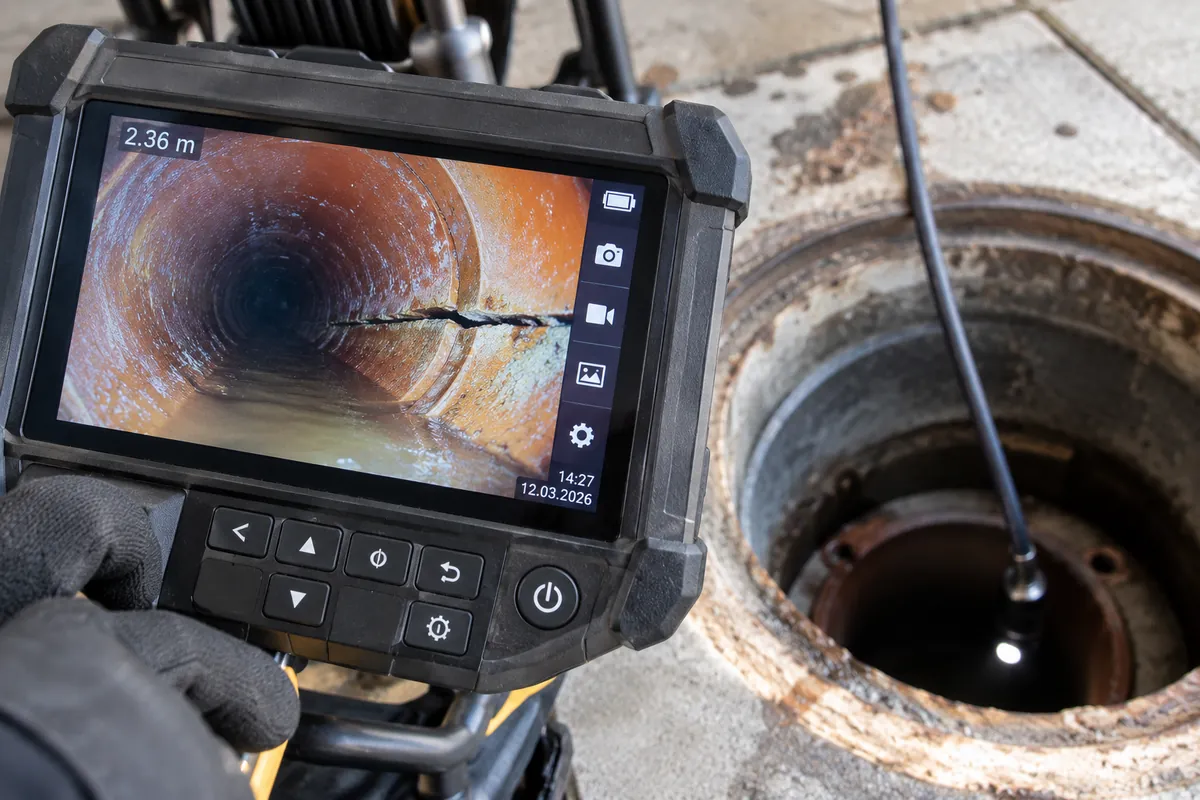
- CCTV inspection: we see inside the pipe, cracks, displaced joints, roots, deformation, back-falls.
Buried drains and sewer connections
Under a basement slab or in the garden, a cracked drain lets water soak into the ground and can, over time, destabilise it. CCTV inspection locates the defect by the length of cable run from the manhole, so digging happens only in the right place.
Frequently asked questions
Do sewer smells always come from a leak?
No. A dried-out trap (on a rarely used appliance) or missing ventilation can let smells back up. A smoke test shows exactly where they get in.
Is fluorescein dangerous?
No. It is a non-toxic dye, used in very low concentration, which is also used for tracing groundwater.
Related pages
Shower leak or leak under tiles
Shower, walk-in shower, bath: supply, drain or waterproofing?
Read moreWater ingress
Roof, terrace, façade, basement: finding where rainwater gets in.
Read moreLeak detection in Luxembourg
Non-destructive detection of water leaks and water ingress across the Grand Duchy, report within 72 hours.
Read moreA leak, water ingress, an insurance claim?
Describe the situation and we'll tell you how we would proceed. 24/7 emergency service.