CCTV drain and sewer survey
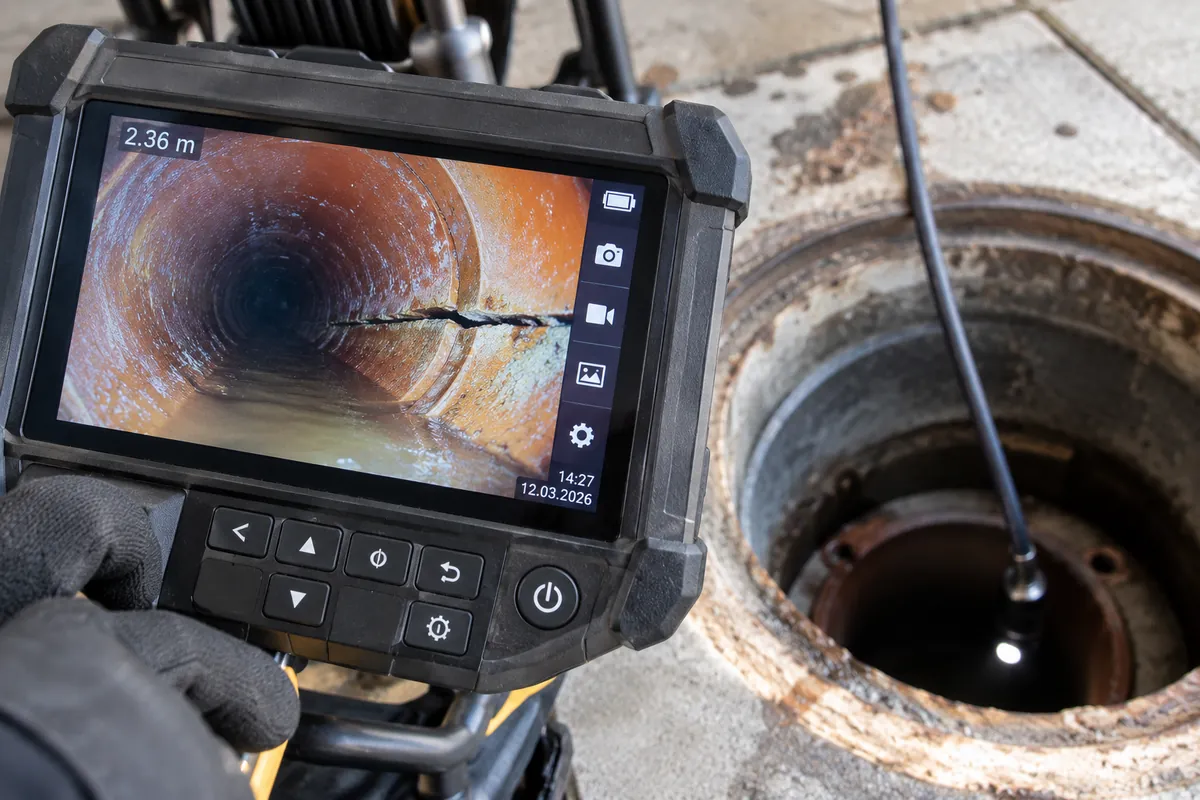
A waterproof camera on the end of a push rod is fed into the drainage system and films the inside of the pipes. You see the condition of the pipe directly: cracks, displaced joints, roots, collapses, deposits, back-falls. The length of rod paid out tells you how far the defect is from the access point.
How it works
The camera goes in through a manhole, a cover or a rodding eye, then is pushed gradually along the pipe. The picture is shown live on a screen, and the rod counter shows how far each defect is from the entry point. That tells us which section is affected and where to dig, instead of exposing the whole pipe.
Unlike fluorescein or smoke, which show that a defect exists, the camera shows what it is: a crack, a displaced joint or a root do not call for the same repair.
When we use it
- buried drains or drains under a slab;
- the house's connection to the sewer;
- after a smoke or fluorescein test, to see the defect and decide on the repair;
- slow drainage or repeated backing up.
Limits
It needs an access point: a manhole, a cover, a rodding eye. Small diameters and tight bends limit how far the camera can go, and a blocked pipe has to be cleared first.
Related pages
Drain and sewer leak
Drains, downpipes, connections and sewers: leaks, damp and sewer smells.
Read moreSmoke test
Non-toxic smoke that escapes through defects in a drainage system and tracks down smells.
Read moreEndoscopy
Looking inside a suspended ceiling, a service duct or dry lining without taking anything apart.
Read moreA leak, water ingress, an insurance claim?
Describe the situation and we'll tell you how we would proceed. 24/7 emergency service.